




How AI Mini PCs Achieve High Performance in Compact Systems
As artificial intelligence becomes more integrated into everyday computing, a new category of devices is emerging: AI-optimized Mini PCs.
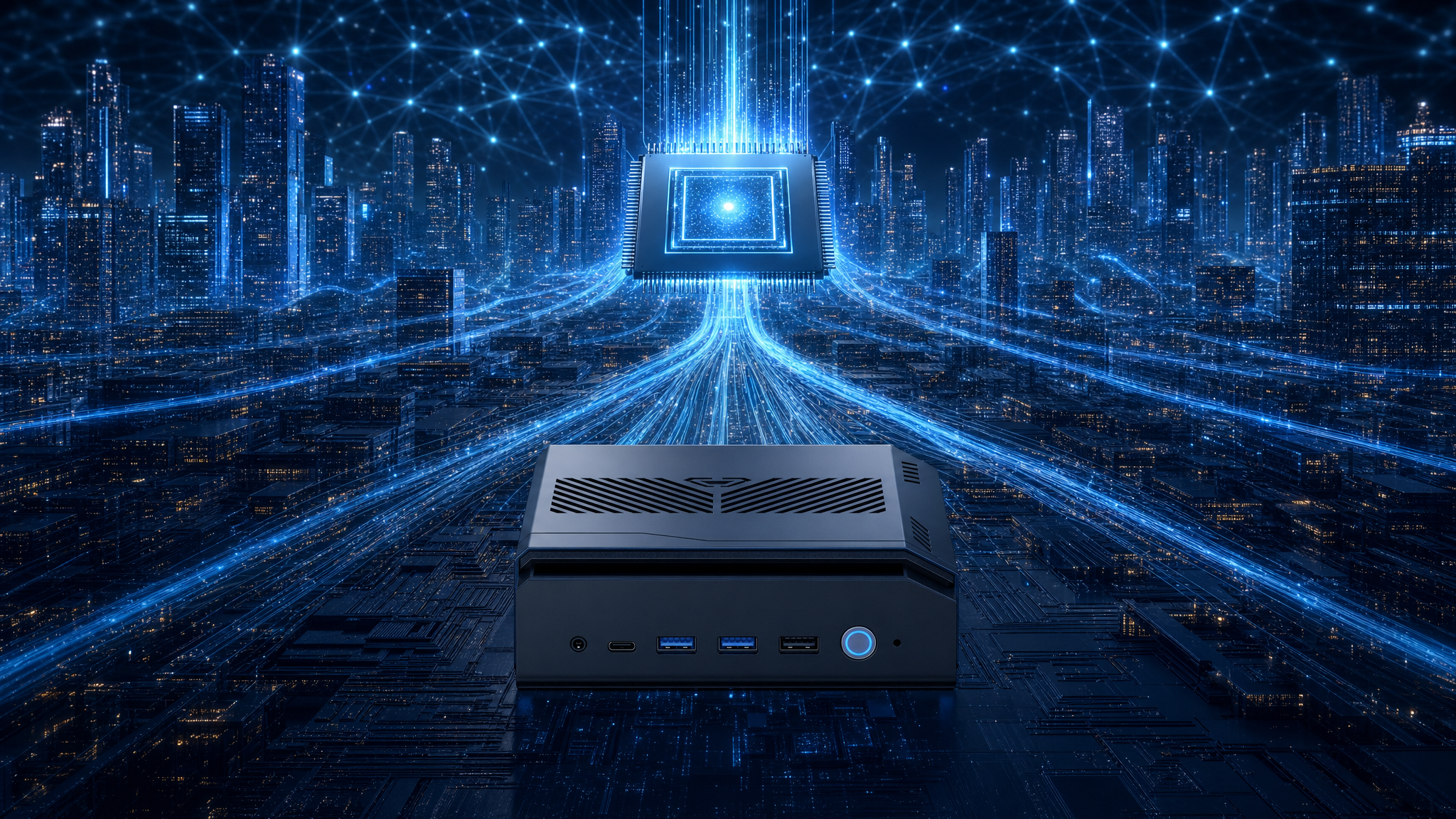
Unlike traditional systems that rely primarily on CPU or GPU performance, modern AI Mini PCs introduce a third computing engine — the NPU (Neural Processing Unit), enabling real-time AI acceleration directly on the device.
This shift is redefining what compact computers can achieve.
The Evolution of Computing Architecture
Traditional computing systems rely on:
- CPU for general processing
- GPU for graphics and parallel tasks
However, AI workloads require a different approach.
Modern AI Mini PCs integrate:
- CPU for logic and system tasks
- GPU for visual and parallel computation
- NPU for AI inference and neural processing
This creates a heterogeneous computing system where each component handles a specific type of workload efficiently.
What Makes AI Mini PCs Different
AI Mini PCs are not defined by size, but by architecture.
Key characteristics include:
- Dedicated AI acceleration (NPU integration)
- Parallel processing across CPU, GPU, and AI engines
- Optimized data flow for machine learning tasks
- Low-latency AI inference capabilities
This allows compact systems to perform tasks that previously required large workstation setups.
Understanding AI Performance and TOPS
One of the most important metrics in AI computing is TOPS (Tera Operations Per Second).
TOPS measures how many trillion AI operations a system can perform per second.
Higher TOPS values generally indicate:
- Faster AI inference
- Better real-time processing
- Improved generative AI performance
- More efficient local AI execution
Modern AI Mini PCs can reach multi-tens of TOPS performance levels, enabling them to handle advanced AI workloads locally.
Real-World AI Workloads on Mini PCs
AI Mini PCs are now capable of handling a wide range of applications, including:
- AI-assisted content creation
- Real-time image generation
- Video enhancement and rendering
- Natural language processing tasks
- Smart automation workflows
- Local AI model execution
This makes them suitable for creators, developers, and professionals working with AI tools.
Why Edge AI Computing Matters
Edge AI refers to processing AI tasks directly on local devices instead of relying on cloud servers.
Benefits include:
- Lower latency
- Improved data privacy
- Reduced dependency on internet connection
- Faster response times
AI Mini PCs are becoming key devices in the edge computing ecosystem due to their balance of performance and efficiency.
Conclusion
AI Mini PCs represent a fundamental shift in computing design.
By combining CPU, GPU, and NPU architectures into a unified system, they enable compact devices to deliver powerful AI performance once reserved for large workstations.
As AI continues to evolve, this category will play a central role in both personal and professional computing environments.