





What Makes an AI PC Different?
An AI PC is more than a traditional computer with an AI label. What really sets it apart is the hardware designed to handle AI workloads more efficiently.
As AI becomes part of daily computing, users expect their computers to do more than just run applications. AI-powered features such as real-time assistance, video enhancement, voice processing, and local AI applications are becoming increasingly common.
However, these experiences require more than traditional computing power. AI workloads often involve continuous calculations that need to be handled efficiently without affecting everyday tasks.
This is where the Neural Processing Unit (NPU) becomes important.
An NPU is a dedicated AI processor designed to accelerate AI inference — the process of running trained AI models to complete tasks. For supported AI workloads, the NPU can provide more efficient AI processing while allowing the CPU and GPU to focus on the workloads they are best suited for.
Why Traditional Processors Struggle With Modern AI Workloads
Modern CPUs and GPUs are already powerful enough to run many AI applications. However, AI workloads introduce new challenges because AI inference often requires repeated neural network calculations running continuously in the background.
Imagine using an AI assistant while editing videos, joining an online meeting, or running multiple applications at the same time. Without dedicated AI acceleration, these workloads may compete for system resources and affect the overall experience.
When AI tasks rely mainly on the CPU, background processing can reduce system responsiveness and impact multitasking performance. When AI workloads rely heavily on the GPU, they may compete with other GPU-intensive tasks such as gaming, video editing, or 3D rendering. The result can be increased power consumption, higher workload pressure, and a less consistent experience.
The goal of an NPU is not to replace the CPU or GPU. Instead, it provides a dedicated path for AI processing, allowing different computing units to handle the workloads they are designed for.
A smarter PC is not simply one with more processing power. It is one that knows which processor should handle each task.
CPU, GPU, and NPU: Different Engines for Different Tasks
A modern AI PC is built around cooperation between multiple computing engines. Each processor plays a different role in creating a balanced computing experience.
The CPU remains the foundation of the system. It handles everyday computing tasks, applications, system management, and overall coordination. The GPU provides powerful parallel computing performance for graphics rendering, video processing, creative workloads, and demanding calculations. In AI applications, GPUs are also widely used for tasks such as AI model training.
The NPU focuses on AI inference. Instead of relying entirely on the CPU or GPU for every AI task, the system can assign suitable AI workloads to the NPU for more efficient processing.
This allows each component to focus on the workloads it is best suited for. The CPU handles general computing and system operations, the GPU delivers high-performance parallel processing, and the NPU provides efficient AI acceleration for supported workloads.
Together, CPU, GPU, and NPU create a more balanced architecture that enables modern AI PCs to deliver better performance, efficiency, and flexibility across different workloads.
What Does an NPU Change for Everyday Users?
The value of an NPU is not simply about adding another processor inside a computer. The real benefit is making AI features more practical, responsive, and efficient in everyday use.
For example, during video meetings, AI-powered features such as image enhancement, background processing, and voice improvement need to work in real time. With dedicated AI acceleration, these tasks can run more efficiently without constantly competing with other applications.
Another important advantage is local AI privacy. Many cloud-based AI services require users to upload data to external servers for processing. For personal photos, private documents, creative projects, or business files, some users may prefer keeping their information on their own devices.
Local AI changes this approach. When supported AI workloads run directly on the device, data does not need to leave the computer for processing.
Your data stays where it belongs — on your own device.
This gives users more control over their information while reducing dependence on cloud services.
Why AI Mini PCs Need Efficient AI Hardware
For compact computers, efficient hardware design is especially important.
Large desktop systems can often rely on bigger cooling solutions, higher power consumption, and larger components to achieve high performance. Mini PCs take a different approach. With limited physical space and thermal capacity, compact systems cannot simply increase power to handle every workload.
This makes efficient AI acceleration especially valuable. Instead of depending only on CPU or GPU performance, an NPU provides dedicated AI processing capability while helping maintain a better balance between performance, power efficiency, and compact design.
For AI Mini PCs, smarter workload distribution can be just as important as raw performance.
How BOSGAME Brings Local AI Into a Compact Desktop
AI capabilities are often associated with large workstations and powerful desktop systems. However, many users want AI performance without giving up desk space or flexibility.
This is where AI Mini PCs provide a different approach. BOSGAME AI PCs combine compact desktop designs with advanced AI computing capabilities, creating a practical platform for local AI applications, content creation, productivity, and professional workflows.
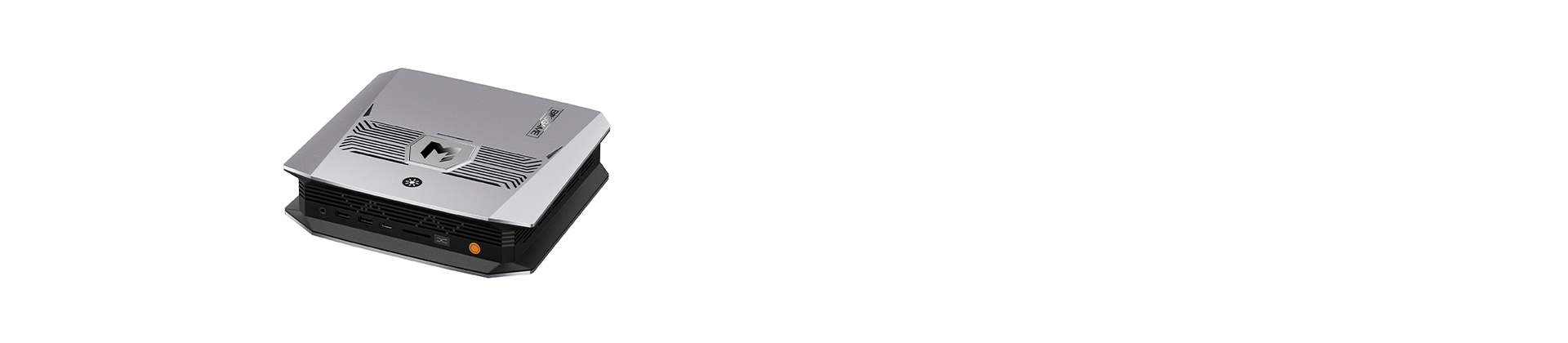
The BOSGAME M5 MAX, powered by the AMD Ryzen AI Max+ PRO 495 processor, brings advanced AI capabilities into a compact desktop platform.
By combining AI acceleration, powerful computing performance, and a small-form-factor design, BOSGAME AI PCs allow users to explore modern AI workloads in a more practical and flexible way.
Instead of choosing between a compact computer and AI capability, users can have both — a small desktop designed for the local AI era.
Conclusion
The future of AI computing is not only about adding more powerful hardware.
It is about creating systems that can intelligently distribute workloads and deliver better experiences in everyday use.
The NPU represents an important step in this evolution, helping AI features run more efficiently while bringing local AI capabilities closer to users.
As AI continues to become part of everyday computing, the combination of CPU, GPU, and NPU will shape how future PCs handle intelligent workloads.
For compact systems like BOSGAME AI Mini PCs, efficient AI processing provides a new way to bring powerful and practical AI experiences into smaller desktop environments.